









In 24 cities

Persian Cat Breed: The Complete Guide for Indian Pet Parents
|
|
Time to read 11 min
Get product availability and delivery timelines based on your location.
Are you sure you want to delete this address?
100% Authentic

Easy return policy

Help us ensure a smooth delivery
Help us ensure a smooth delivery
SIZE GUIDE
|
|
Time to read 11 min
Medically reviewed by Dr. Devayani, MVSc
Persian Cats are flat-faced cats that have long, beautiful coats. Persian cats are known for their docile personality. Persian cats can live between 12 and 17 years. Persian cats are susceptible to both kidney problems and respiratory problems due to their flattened facial structure. If you are looking to bring one home, daily grooming is mandatory, as their long coats matting is a common issue. They also require a more tranquil environment, as they are indoor cats. In India, a Persian kitten will set you back by approximately ₹15,000 to ₹50,000.
Breed Group |
Longhair (Cat Fanciers' Association) |
Origin |
Persia (modern-day Iran); reached Europe from the 1620s |
Height / Length |
25–38 cm tall; medium-to-large, cobby (stocky) build |
Weight |
3.2–4.5 kg (females), 4–6 kg (males) |
Coat Type |
Long, dense, glossy double coat |
Coat Colours |
White, black, blue, cream, red/orange, grey, silver, calico, bi-colour, Himalayan points (7 CFA divisions) |
Eye Colours |
Copper, blue, green, blue-green, hazel, odd-eyed |
Lifespan |
12–17 years (average ~12.5–14) |
Grooming Needs |
High - daily combing is non-negotiable |
Exercise Needs |
Low |
Good With Kids |
Yes - gentle and tolerant; supervise toddlers |
Average Price in India (2026) |
₹15,000–₹50,000+ (doll-face to punch-face) |
Trait |
Rating |
Why |
|---|---|---|
Affection Level |
High |
Devoted and people-oriented; loves gentle attention. |
Friendliness |
Medium–High |
Warm with family, reserved with strangers at first. |
Kid-Friendly |
High |
Patient and even-tempered with respectful children. |
Pet-Friendly |
High |
Coexists peacefully with calm dogs and other cats. |
Exercise Needs |
Low |
Prefers lounging; needs prompting to stay active. |
Playfulness |
Medium |
Enjoys short bursts of interactive play. |
Energy Level |
Low |
A quiet, low-key housemate suited to apartments. |
Trainability |
Medium |
Learns names, 'no', and the litter box readily. |
Intelligence |
Medium |
Smart but unhurried; not a problem-solver breed. |
Shedding Amount |
High |
Long coat sheds year-round; daily combing helps. |
Vocal Level |
Low |
Soft, occasional chirps rather than loud meows. |
Persian cats trace back to long-haired cats from Persia - modern-day Iran. The Italian traveller Pietro della Valle is credited with bringing the first long-haired cats to Europe around 1626.
The breed featured at the world's first organised cat show, held at London's Crystal Palace in 1871, and Queen Victoria's fondness for blue Persians helped cement their popularity. Persians were among the first breeds registered by the CFA when it formed in 1906.
Over the twentieth century, breeders selected for an increasingly flat face. This gave rise to the two types you see today: the traditional doll-face Persian with a longer nose, and the extreme flat-faced show or punch-face Persian.
Persians have a solid, cobby body with short, heavy legs, a broad chest, and a large, round head with full cheeks and big, wide-set eyes. The coat is the signature feature - long, thick, and glossy, with a full ruff around the neck.
The CFA groups Persian colours into seven divisions, so the breed comes in an enormous range of shades. The most popular in India include the white Persian cat, the black Persian cat, the grey Persian cat, the blue Persian cat, and the orange Persian cat. Eye colour ranges from deep copper to blue, green, and odd-eyed, and often tracks the coat colour.
Face type matters for health, not just looks. Doll-face and semi-punch Persians keep a more open airway, while the extreme punch-face Persian cat has the flattest nose - the trait most linked to breathing and eye problems.
The Himalayan Persian cat is essentially a Persian with Siamese-style colour points - darker face, ears, paws, and tail, usually with blue eyes. Because of that Siamese influence, Himalayans tend to be a little more active and playful than a standard Persian, while sharing the same long coat and daily grooming needs.
The British Shorthair shares the round face and calm temperament but has a short, plush coat that needs far less grooming and copes better with heat. If daily combing feels like too much, a British Shorthair - or another breed suited to Indian conditions - may fit better; our guide to cat breeds for the Indian climate can help you compare.
Persians are calm, gentle, and undemanding. The Persian cat personality is famously placid - this is a cat that would rather lounge beside you than climb the curtains or raid the kitchen counter. They welcome affection on their own terms and rarely seek constant attention.
According to the Cat Fanciers' Association, Persians combine an even temperament with genuine devotion to their people, making them easy company for families and other pets. Typical behaviour of Persian cats leans quiet and predictable, so they settle well into apartments and low-traffic homes across Indian cities.
They are creatures of habit. Persians like being fed at the same time and sleeping in the same spot, and they cope less well with sudden change - a useful thing to know before a move or a noisy festival week.
Yes. Persians are patient and gentle, and the CFA describes them as compatible with children of all ages and able to live peacefully alongside other pets. Their low-key nature means they rarely react with aggression.
That calm temperament has limits. Persians dislike rough handling, so supervise toddlers and give the cat an easy escape route to a quiet, elevated spot. Introduce dogs and other cats slowly and on the Persian's terms.
Feed a complete, balanced cat food suited to your Persian's life stage. Because the flat face makes it hard to pick up ordinary kibble, many Royal Canin Persian cat food formulas use an almond-shaped kibble that the cat can grasp more easily - a genuinely practical fit for the breed. You can browse breed-specific Persian formulas on Supertails.
Kittens need a growth formula Persian kitten food until about 12 months, then transition to an adult diet. Watch portion sizes: Persians are prone to weight gain, and the Persian cat food price is worth paying for quality that supports coat and kidney health.
Vet tip - Dr.Devayani, MVSc: “Persians do best on a moisture-rich diet. Mixing in wet food and keeping fresh water available supports their kidneys, which are the breed's most vulnerable organ. Avoid cow's milk - most adult cats are lactose intolerant.” |
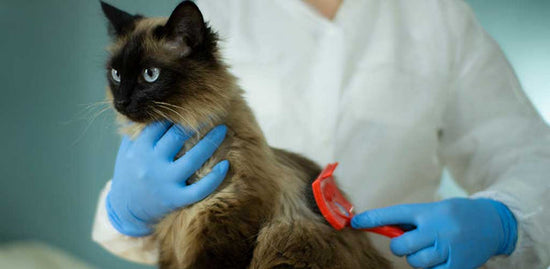
Daily grooming is essential. Persian cat grooming centres on combing the long coat every day with a stainless-steel comb to prevent painful mats, plus regular face and eye cleaning. A steel comb and slicker brush are the two tools you'll use most.
India's climate raises the stakes. Heat, humidity, and monsoon damp make the coat mat and clump faster, so many pet parents bathe their Persian more often in the wet months and keep the coat trimmed in summer. Persian cat grooming at home is doable with a steady daily routine and early training, so the kitten accepts handling.
If you’d rather leave the heavy lifting to experts, book a full Persian cat grooming session at Supertails Clinics in Bengaluru for professional coat trimming, eye and face cleaning, and mat removal tailored to India’s climate. Our groomers handle even fussy Persians gently, so your cat looks and feels their best without stress.
Frequency |
Grooming Tasks |
|---|---|
Daily |
Comb the full coat with a steel comb; wipe eyes and face folds to prevent tear staining. |
Weekly |
Check for mats behind the ears and under the legs; clean ears; trim nails as needed. |
Monthly |
Bathe and blow-dry (more often in monsoon); sanitary trim around the rear; dental check. |
As needed |
Professional grooming or a summer 'lion clip' for cats that mat heavily in the heat. |
Persians have low exercise needs but still need daily movement to avoid obesity. A few short play sessions with wand toys or a ball keep them fit, and gentle Persian cat care means encouraging play rather than expecting them to self-exercise as an active breed would.
Training is easier than many expect. The CFA rates Persians among the easiest cats to train; they learn their names, respond to 'no', and take to the litter box quickly. Keep sessions short, reward with treats, and start young so grooming and handling feel normal.
Persians are lovable but not low-maintenance in terms of health. The most common concerns are:
Polycystic kidney disease (PKD) - an inherited condition affecting roughly a third of Persians historically; studies report 36–49% prevalence. A DNA test prevents it.
Brachycephalic airway syndrome - the flat face can cause noisy breathing and heat intolerance, a real risk in Indian summers.
Epiphora (tear overflow) and staining - very common in flat-faced Persians- need daily eye cleaning.
Entropion - inward-folding eyelids that rub the cornea and may need correction.
Progressive retinal atrophy (PRA) - a genetic cause of gradual vision loss; ethical breeders screen for it.
Dental crowding and malocclusion - the short jaw crowds teeth, so plaque builds faster.
Ringworm (dermatophytosis) - the dense coat can harbour it, especially in humid weather.
Keeping vaccinations and deworming current is your best routine defenceYou can also stock preventive essentials from the cat health and wellness range.
Vet note - Dr. Devayani, MVSc (reviewing vet): “Before buying any Persian kitten, ask for the parents' PKD DNA-test results in writing. For flat-faced kittens, watch for open-mouth breathing, snoring, or reluctance to play in the heat - these are early signs of airway trouble and warrant a vet visit. When in doubt, book a free vet consultation on Supertails.” |
Open nostrils and quiet breathing - extremely flat (punch/peke) faces struggle in Indian heat and humidity.
Clear eyes with minimal tear staining; ask whether the kitten has been checked for entropion (inward-folding eyelids).
A dense, mat-free coat with a soft, springy texture - a sign of good nutrition and grooming.
A written PKD DNA test result for both parents - the single most important document for this breed.
Up-to-date vaccination and deworming records.
A kitten at least 8–12 weeks old, litter-trained and comfortable being handled.
Doll-face vs punch-face: doll-face Persians breathe more easily, need less vet care, and cost less.
Whether you search for Persian kittens for sale or look into Persian cats for adoption, vet the source carefully. India has no single widely recognised feline registry, so pedigree papers matter less than health documentation. Before you pay:
Ask if both parents are PKD DNA-tested and request the results in writing.
See the kitten and mother live - in person or over a video call - before any payment.
Check vaccination, deworming, and vet records; the kitten should be at least 8 weeks old.
Prefer doll-face or semi-punch for better long-term health, especially in hot cities.
Be wary of unusually cheap listings - a bargain often means no health testing and higher vet bills later.
Adoption is worth considering. Persians and Persian mixes do turn up with rescues and on adoption networks, and searching for Persian kittens for adoption locally can connect you with a cat that needs a home. A verified breeder or a reputable rescue both beat an unvetted 'Persian cat near me' classified ad.
The Persian cat price in India ranges widely with face type, colour, pedigree, and city. The cost of a Persian cat is highest for extreme flat-faced and rare-coloured kittens. Here's the 2026 picture:
Type |
Price Range (₹) |
Notes |
|---|---|---|
Doll-face Persian (pet quality) |
₹15,000–₹35,000 |
Healthier airway; lower ongoing vet cost. |
Punch-face Persian |
₹25,000–₹50,000+ |
High demand; higher grooming and health upkeep. |
Rare colours (golden, odd-eyed) |
₹60,000+ |
Scarcity and lineage drive the premium. |
Himalayan Persian |
₹18,000–₹55,000+ |
Colour-point coat; price tracks coat and eye quality. |
Monthly upkeep |
₹3,500–₹7,000 |
Food, litter, grooming, and routine vet care. |
City matters too: prices in Bengaluru and Kerala tend to run lower, while Delhi and Mumbai sit at the top.
Pros |
Cons |
|---|---|
|
|
A Persian is one of the most rewarding companion cats you can bring home - calm, devoted, and beautiful - provided you can commit to daily grooming and choose a health-tested kitten. Favour a doll-face or semi-punch cat, insist on PKD-tested parents, and keep your Persian cool and well-groomed through the Indian summer. Do that, and you'll have a gentle friend for 15 years or more. Ready to set up for your new cat? Explore vet-approved cat food and essentials on Supertails, with free vet guidance and fast delivery in your city.
No. No cat is truly hypoallergenic, and Persians are heavy shedders whose long coat spreads dander widely. If someone in your home has mild allergies, frequent grooming and cleaning help, but a Persian is not a low-allergen choice.
Persians tolerate short periods alone better than clingy breeds, but they still need daily grooming, feeding, and company. Leaving one alone for a full working day is fine occasionally; for longer stretches, arrange a pet sitter or a companion.
Yes. The long double coat sheds year-round, and shedding often rises in warmer months. Daily combing dramatically reduces loose hair, hairballs, and mats, so shedding is manageable rather than a dealbreaker.
Kept indoors with good food and regular vet care, Persians commonly live 12–17 years. Screening for PKD and managing a healthy weight are the two biggest factors in reaching the upper end of that range.
Persians can have copper, blue, green, blue-green, hazel, or odd-coloured eyes, and colour usually tracks the coat. Blue eyes are most associated with white and Himalayan-point Persians and are sought after, which can raise the price.
Home grooming mainly costs the price of a good steel comb, slicker brush, and cat shampoo. Professional grooming sessions typically run a few hundred to over a thousand rupees depending on the city and whether a full clip is needed.
|
Dr. Devayani, MVSc Dr. Devayani is a veterinary surgeon with a Master of Veterinary Science (MVSc) and over 10 years of clinical experience in companion-animal medicine. As part of the in-house veterinary team at Supertails, she reviews pet-health content for medical accuracy and advises pet parents on preventive care, nutrition, and breed-specific health - including the kidney and airway concerns most relevant to Persian cats. |


Accepted formats: JPG, JPEG, or PDF
Upload clear images under 8MB for prescription verification
As per Indian Medical Laws a valid prescription should have the following information
DO'S AND DONT'S
Upload Clear Image
Make sure the picture captures clear and legible handwriting/type. Place the prescription on a flat surface to improve focus and clarity in the image.
No Picture of Medicines
Do not Crop the Image
2 item in cart
₹10,360


