









In 24 cities

Husky Dog Price in India: The Complete 2026 Cost Guide for Informed Indian Pet Parents
|
|
Time to read 18 min
Get product availability and delivery timelines based on your location.
Are you sure you want to delete this address?
100% Authentic

Easy return policy

Help us ensure a smooth delivery
Help us ensure a smooth delivery
SIZE GUIDE
|
|
Time to read 18 min
Let's be honest about how most people end up on this page. You saw a Husky on Instagram — those ice-blue eyes, that thick wolf-like coat, that face — and something in your brain said I want one. Completely valid. Siberian Huskies are among the most visually spectacular dogs in the world, and their personalities match the drama of their appearance.
But here's what separates the Indian pet parents whose Huskies thrive from the ones who rehome them within a year: the second group bought based on the purchase price. The first group budgeted for the full picture.
A Husky in India is not a difficult dog to love. It is, however, a demanding dog to own — financially, logistically, and energetically. This guide from Supertails gives you every number, every India-specific consideration, and every honest cost so you can make a decision with your eyes fully open.

There is one Siberian Husky — a single breed, recognised by the AKC, FCI, and Kennel Club of India. When you see listings for "Alaskan Husky," "Sibercaan," or "Indian Husky," these are either different breeds entirely or mixed-breed dogs being marketed under the Husky name. If you want a Siberian Husky, insist on KCI registration or verifiable pedigree documentation and meet the parent dogs in person.
In 2026, Husky puppy prices in India range from ₹40,000 for a basic non-KCI pup to ₹1,50,000 or more for show-quality, rare-coat, or imported-bloodline dogs. The sweet spot for most informed pet parents — a healthy, KCI-registered pup from a reputable breeder — sits at ₹60,000–₹95,000 in metro cities.
Here's the honest four-tier breakdown:
Tier 1 — Unregistered or backyard breeder: ₹20,000 – ₹40,000 These dogs may look like Huskies. Without documentation, you cannot verify purebred lineage, health-screened parents, or ethical breeding conditions. Huskies are predisposed to hip dysplasia, Progressive Retinal Atrophy, and zinc-responsive dermatosis — conditions that surface later and cost significantly more to treat than the money saved upfront. This tier is a false economy.
Tier 2 — Reputable breeder, KCI registered: ₹50,000 – ₹95,000 Purebred, KCI-certified Siberian Huskies from reputable breeders typically range from ₹50,000 to ₹95,000 in 2026. This is the right tier for a family companion. Documented pedigree, health-tested parents, vaccinated and socialised puppies, and a breeder who will answer your questions six months after purchase.
Tier 3 — Show quality or champion bloodline: ₹80,000 – ₹1,50,000+ Imported Huskies or those with unique features like blue eyes or rare coat colours cost significantly more. For a family pet, this tier adds primarily paperwork value. The dog's health and temperament at this tier are excellent — but so is a well-bred Tier 2 Husky.
Tier 4 — Adoption: ₹10,000 – ₹25,000 Huskies do appear in Indian shelters and breed-specific rescues, often because first-time owners underestimated the commitment. Adoption costs ₹10,000–₹25,000 versus ₹60,000–₹1,00,000+ for a puppy. An adult Husky that has already been trained and socialised is not a lesser dog — for the right family, it is a better fit. Organisations like Friendicoes (Delhi) and CUPA (Bengaluru) occasionally have adult Huskies available. Supertails' vet team can help connect you with rescue contacts in your city.
One rule that applies across all tiers: never complete a Husky purchase through an online-only transaction. Visit in person, meet both parents, and ask for vaccination records, deworming history, and pedigree papers. A Husky who greets strangers with tail-wagging enthusiasm from a clean, well-managed environment is worth more than any certificate.

Coat colour is one of the most common reasons buyers pay more than they need to — or get scammed. Here's the honest breakdown:
Coat Colour |
Price Range (₹) |
Notes |
Black & White |
₹50,000 – ₹90,000 |
Most common. No health or temperament difference. |
Grey & White |
₹55,000 – ₹95,000 |
Classic "wolf look." High demand. |
Red & White |
₹60,000 – ₹1,00,000 |
Warm reddish-brown coat. Moderately rare. |
Agouti (wild colouring) |
₹65,000 – ₹1,10,000 |
Multi-toned, primitive look. Sought after by enthusiasts. |
Pure White |
₹70,000 – ₹1,30,000 |
Rare, very high demand. Requires extra sun protection in India. |
Blue or Bi-coloured eyes |
+₹10,000 – ₹20,000 premium |
Eye colour has zero bearing on health or temperament. |
The critical thing to understand: colour and eye colour are cosmetic. A black-and-white Husky from a reputable breeder with health-tested parents is a significantly better choice than a striking white Husky from an unverified source. Sellers who price their dogs primarily on coat colour or eye colour and have little to say about parent health certifications are a red flag.

The price difference is small — typically ₹3,000–₹8,000 — and varies by breeder. What matters more than price is the temperament and lifestyle fit:
Male Husky puppy price: ₹50,000 – ₹1,00,000
Female Husky puppy price: ₹50,000 – ₹95,000
Males are generally larger (25–32 kg vs 18–25 kg for females), more assertive, and can be more territorial around other male dogs during adolescence. Females tend to mature slightly faster and are often slightly calmer to handle during the puppy phase, though both sexes are equally independent and require the same level of training commitment. For most Indian families, the sex matters far less than the quality of the breeder and the temperament of the individual puppy.
Location meaningfully affects what you'll pay — metro demand, cost of living, and breeder infrastructure all factor in. Here are the verified 2026 ranges across major Indian cities:
City |
Price Range (₹) |
Delhi / NCR |
₹45,000 – ₹69,000 |
Mumbai |
₹50,000 – ₹95,000 |
Bengaluru |
₹50,000 – ₹97,000 |
Pune |
₹45,000 – ₹90,000 |
Hyderabad |
₹40,000 – ₹89,000 |
Chennai |
₹45,000 – ₹91,000 |
Kolkata |
₹40,000 – ₹92,000 |
Kerala |
₹38,000 – ₹75,000 |
Siberian Husky dog price in Delhi: Delhi has a strong Husky ownership culture partly because its winters — genuinely cold, sometimes sub-5°C in January — give Huskies a few months of climate comfort. The flip side: Delhi summers are brutal, with temperatures regularly crossing 45°C. If you're buying a Husky in Delhi, reliable air conditioning from March to October is not optional. Delhi prices average ₹45,000–₹69,000 for pet-quality KCI-registered dogs, with show-quality or imported bloodlines going considerably higher.
Husky dog price in Chennai: Chennai is one of India's most climatically challenging cities for a Husky — hot, coastal, and humid for most of the year with no meaningful winter. Chennai Husky prices average ₹45,000–₹91,000. If you live in Chennai and are serious about owning a Husky, your cooling infrastructure — reliable AC in the living area, a cooling mat, and restricted outdoor activity to early morning only — must be in place before the puppy arrives, not after.
Husky dog price in Kolkata: Kolkata Husky prices range from ₹40,000–₹92,000. Kolkata's hot, humid summers make the same demands as Chennai. The city's Husky community is active and growing, and the proximity to breeders in North Bengal and the hills occasionally means slightly more competitive pricing than southern metros.
Husky puppy price in Kerala: Kerala's tropical climate — warm, humid, and coastal year-round — is among the most demanding for a Husky in India. Husky prices in Kerala range from approximately ₹38,000 for pet quality to ₹75,000 for show quality. Kerala has a surprisingly passionate Husky community despite the climate, and many owners there manage the heat successfully with consistent AC and disciplined exercise scheduling.
Siberian Husky cost in Bangalore: Bengaluru's relatively temperate climate — rarely above 35°C — makes it one of the more Husky-friendly Indian metros, particularly in the hill-adjacent outskirts. Bengaluru Husky prices range from ₹50,000–₹97,000. The city's density of responsible, registered breeders is among the highest in South India, which means more options — but also more due diligence required to separate ethical breeders from opportunistic ones.
A practical note: a breeder in a smaller city or hill town — Ooty, Coorg, Manali, Shillong — will sometimes produce better-socialised, healthier Huskies at lower prices than a metro-based breeder with higher overheads. If you're willing to arrange verified transport, casting a wider net than your city is worth considering.

The puppy purchase price is the beginning of the conversation, not the end of it. Here is what the first year actually costs.
One-time first-year costs:
Vaccinations (full puppy schedule): ₹4,000–₹9,000. Core vaccines — Distemper, Parvovirus, Hepatitis, Leptospirosis, Rabies — are administered in a series across the first 16 weeks. Your vet will schedule these; do not skip or delay.
Microchipping: ₹800–₹2,000. Permanent identification that's essential for a breed known for escape artistry. Huskies are sighthounds by instinct — they will run if given the opportunity, and they are fast. A microchip means a found Husky has a way home.
Spay or neuter: ₹6,000–₹18,000 depending on sex and city. Strongly recommended for non-breeding dogs.
Essential first setup — bed, crate, bowls, collar, harness, leash: ₹5,000–₹12,000. For Huskies specifically, invest in a quality dog harness rather than a collar for walks — their neck structure and pull strength make collar-based leash control genuinely risky. Browse Supertails' dog collars, leashes and harnesses collection for options suited to large, high-energy breeds.
Air conditioning setup (if not already present): ₹30,000–₹80,000. This is the India-specific cost that no overseas Husky ownership guide mentions and that no Indian one should omit. A Husky without reliable cooling in an Indian summer is not a comfortable dog — it is a dog at health risk. The electricity cost of running AC consistently for a Husky in India can range between ₹50,000 and ₹1,50,000 annually depending on your city's climate, the unit's efficiency, and how many months of cooling is required. In cities like Delhi, Mumbai, and Chennai, assume April through October at minimum.
Obedience training (first year): ₹5,000–₹20,000. Professional obedience training in Indian cities costs ₹4,000–₹15,000 per month, with a complete month-long programme in Bengaluru or Pune running ₹15,000–₹30,000. Training is not optional for a Husky. These are independent, intelligent, selectively-hearing dogs. An untrained Husky in an Indian apartment is a very specific kind of chaos. Begin from week one, stay consistent, and use positive reinforcement exclusively — Huskies respond poorly to punishment-based training.
Total realistic first-year cost including purchase price: ₹1,50,000–₹4,00,000+ depending on city, breeder tier, and whether AC infrastructure was already in place.

The total monthly cost of Husky ownership in India ranges between ₹9,000 and ₹17,500. Here's what that breaks down to:
Huskies are actually efficient eaters for their size — bred to pull sleds on minimal food. A 20–27 kg adult Husky needs roughly 200–350 grams of quality kibble daily. Premium medium-to-large breed food costs ₹300–₹700 per kg, working out to ₹3,000–₹6,000 per month.
Critically for Indian pet parents: Huskies are genetically predisposed to zinc-responsive dermatosis — a condition where they struggle to absorb zinc from food, causing crusty skin, hair loss, and immune issues around the face, elbows, and paws. This is exacerbated by heat stress. Choose a food with bioavailable zinc sources and real meat as the first ingredient.
Supertails' large dogs food collection and grain-free dog food section are good starting points. Brands like Orijen, Farmina, and Acana — available through Supertails' Orijen, Farmina, and Acana collections — are particularly well-suited to Husky nutritional profiles.
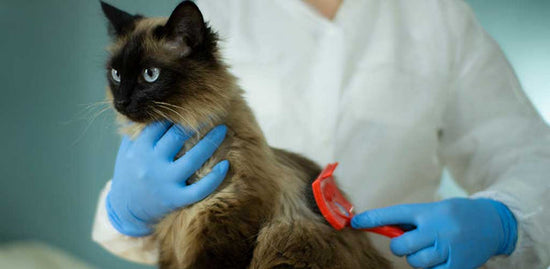
Huskies have a thick double coat that sheds in two catastrophic seasonal dumps per year and continuously at a lower level the rest of the time. Grooming expenses range from ₹1,500 to ₹3,000 per session, and investing in de-shedding tools and shampoos is recommended. Between professional appointments, daily brushing during blow-coat season and three times weekly otherwise is non-negotiable. Browse Supertails' dog brushes and slickers and broader dog grooming supplies collection for Husky-appropriate tools.
One critical note: never shave a Husky's double coat in India, no matter how hot it gets. This is among the most common and most damaging mistakes Indian Husky owners make. The double coat regulates body temperature in both directions — removing it destroys this natural insulation and increases heat stress rather than reducing it.
You can also visit any Supertails+ Clinic in Bangalore to get some of the best, most-skilled professionals to groom and pamper your dog. All you need to do is get your Husky a grooming appointment, and our professionals will make sure they come out looking fresh, and majestic as can be.

This is the cost unique to Indian Husky ownership and the one that catches most new owners off guard. Averaged across the year, the AC cost alone can add ₹2,000–₹5,000 to your monthly pet expense. Budget for it explicitly, not as a hidden household cost.
Regular vet check-ups, vaccinations, and deworming sessions cost around ₹5,000–₹10,000 annually. However, Huskies have specific health predispositions — hip dysplasia, PRA, hypothyroidism, and zinc deficiency — that require monitoring. A vet familiar with the breed is worth seeking out specifically. Supertails offers online vet consultations for when you need an expert opinion before making the trip to a clinic.

Huskies are working dogs by origin — they were bred to run 100+ kilometres daily pulling sleds across Arctic tundra. An under-stimulated Husky in an Indian apartment will redirect that energy into your furniture, your walls, and your sanity. Rotate toys regularly, use puzzle feeders, and invest in high-durability fetch and interactive toys. Browse Supertails' dedicated Husky toys collection and dog interactive toys for enrichment options that can handle a Husky's play intensity.
Most generic Husky food guides don't account for India's climate or the breed's specific metabolic quirks. Here's what actually works.
Puppy (8 weeks – 12 months): Feed a large-breed puppy formula with controlled calcium and phosphorus ratios. Huskies grow relatively fast but are medium-sized — avoid giant breed formulas. Three meals daily until 4 months, then two. Supplement with fish oil for coat health from 8 weeks onwards. Zinc-rich foods are particularly important from puppyhood given the breed's absorption tendency. Royal Canin Medium Puppy, Farmina N&D Puppy, or Orijen Puppy are all excellent choices available on Supertails.
Adult (1–7 years): High-protein, meat-first formula. Huskies are efficient metabolisers — they need quality over quantity. Overfeeding is a common problem in India because owners project a large-dog appetite onto a medium-sized efficient eater. A 25 kg Husky needs roughly 200–300 grams of quality kibble daily — significantly less than a Labrador of similar size. Feed twice daily. Free-feeding causes obesity, which accelerates joint problems.
Foods to strictly avoid: Chocolate, onions, garlic, grapes and raisins, xylitol (in sugar-free products), cooked bones, macadamia nuts, and excessive salt. In India specifically, avoid feeding leftover spiced human food — the oil, salt, and spice levels in Indian cooking cause digestive distress in most dogs.
This section is worth reading carefully — it's where most buyers in India make an expensive mistake.
Welcome a kennel visit where you meet the puppy with both parents in a clean, stimulating environment
Provide vaccination records, deworming records, and a health certificate at handover
Health-screen breeding parents for hip dysplasia (OFA/PennHIP) and Progressive Retinal Atrophy
Ask you detailed questions about your lifestyle, home, and experience before agreeing to sell
Offer post-sale support and be willing to take the puppy back if circumstances change
Be registered with the Kennel Club of India (KCI) and able to produce the registration paperwork
The seller refuses a kennel visit and offers to "deliver to your door" or meet at a neutral location
Multiple litters are available simultaneously — a sign of puppy mill operations
Prices are suspiciously low (below ₹30,000 for a "purebred" Husky)
Vaccination records are handwritten, vague, or missing
The breeder cannot introduce you to either parent dog
You feel pressured to decide quickly or pay a deposit before seeing the puppy in person
Online classified ads (OLX, Quikr) remain a major source of Husky fraud in India — attractive photos, low prices, and no accountability. If you need guidance on finding verified breeders in your city, consult a Supertails vet — our team regularly interacts with responsible breeders across Indian metros.
Before the price matters, the lifestyle fit matters more. Here is what a Husky in India actually requires, plainly stated.
Exercise: 1–2 hours daily, non-negotiable. Siberian Huskies are among the most energetic dog breeds in existence. Originally bred to pull sleds across vast Arctic distances, they possess seemingly limitless stamina and require substantial daily exercise to remain healthy, happy, and well-behaved. In Indian cities, this means two structured walks daily — one at dawn, one after sunset — plus active indoor play. Never off-leash in open areas without a secure fence. Huskies have a strong prey drive and will run, and they will not come back when called.
Howling. Huskies do not bark much. They howl — loudly, dramatically, and with what can only be described as genuine emotional commitment. If you live in an apartment building with thin walls and neighbours who value silence, please factor this in honestly before you commit.
Escape artistry. Huskies are Houdini-level escape artists. They will scale fences, dig under gates, and test every boundary of your home's security. A secure harness and leash on every single outdoor outing is mandatory. Browse Supertails' dog harnesses for heavy-duty options appropriate for a powerful medium-large breed.
They are NOT guard dogs. Huskies are pack-oriented, social dogs who greet strangers enthusiastically. They are not territorial. They may alert you with a howl but will equally likely try to make friends with an intruder. If security is your primary motivation for wanting a dog, a Husky is not your answer.
First-time pet parent suitability: Low to moderate. Huskies are too energetic for people with no pet parenting experience. Their independence, stubbornness, and high exercise needs make them a challenging first dog. If you've never owned a dog before, spending six months researching and ideally fostering or volunteering with the breed before committing is genuinely advisable.

Owning a Siberian Husky in India is a significant commitment that extends far beyond the initial purchase price. While the 2026 market rates for a healthy, KCI-registered puppy sit between ₹60,000 and ₹95,000, the true investment lies in the long-term lifestyle adjustments required to keep an Arctic breed comfortable in a tropical climate. From the non-negotiable costs of 24/7 air conditioning during blistering summers to the intensive grooming and high-energy exercise demands, a Husky is a premium companion that requires a pet parent with both the financial means and the physical stamina to match the breed's legendary endurance.
Ultimately, the goal of any prospective owner should be to prioritize health and temperament over cosmetic traits like eye color or coat rareties. By choosing a responsible breeder who performs genetic screening and by budgeting for the "hidden" costs of Indian Husky ownership—such as professional training and specialized nutrition—you ensure that your dog doesn't just survive the heat, but truly thrives as a member of your family. If you are prepared for the vocal "howls," the mountain of shed fur, and the specialized care, a Husky will reward you with a level of loyalty and personality that is as striking as those famous blue eyes.
A Siberian Husky puppy in India in 2026 costs between ₹40,000 and ₹1,50,000, depending on the breeder, bloodline, and city. KCI-registered pet-quality dogs from reputable breeders typically sit at ₹60,000–₹95,000 in metro cities. Show-quality or imported bloodlines cost more. Anything below ₹30,000 for a "purebred" Husky is a serious red flag.
Siberian Husky prices in Delhi average ₹45,000–₹69,000 for KCI-registered pet-quality dogs. Show-quality or champion-bloodline dogs can exceed ₹1,00,000. Delhi's cold winters make it more Husky-friendly than most Indian cities, but its summers — regularly 44–46°C — demand reliable AC from at least March to October.
The total monthly cost of Husky ownership in India ranges between ₹9,000 and ₹17,500, covering food, grooming, vet care, toys, and AC electricity. The electricity cost of cooling your home for a Husky is the India-specific expense that most ownership guides don't mention — budget ₹3,000–₹8,000 per month during the warmer months specifically.
Yes — thousands of Huskies across India are living healthy, happy lives. Their double coat is more thermally adaptive than it looks — it insulates against heat as well as cold. The non-negotiable requirements are: reliable AC from March to October, walks only before 8 AM and after 7 PM, constant access to fresh cool water, and a vet who monitors for heat stress. Never shave the double coat — it makes heat stress worse, not better.
Enormously. Huskies "blow their coat" twice a year in two dense seasonal dumps, and shed at a lower but consistent level the rest of the time. During blow-coat periods, daily brushing is essential to manage the fur and keep the coat healthy. Outside of these periods, brushing three times weekly is sufficient. The right grooming tools are essential.
Conditionally. A Husky can live in an apartment if — and only if — exercise needs are met daily without exception, cooling is reliable, and the dog is not left alone for extended periods. Huskies are deeply social and do not tolerate isolation well. They are also vocal, which creates real issues in dense apartment buildings. An independent house with even a small secure yard is significantly more suitable.
Common health concerns include hip dysplasia, cataracts, Progressive Retinal Atrophy, hypothyroidism, and zinc-responsive dermatosis. In the Indian context, heat stress and dehydration are additional concerns during summer months. A responsible breeder will screen parent dogs for PRA and hip/elbow issues — ask for these test results before purchase.
Honestly, no — not as your first dog. Huskies are too energetic and independent for most people with no prior pet parenting experience. They require experienced, consistent handling, firm boundaries from day one, and an owner who understands that "selective hearing" is a Husky feature, not a training failure. If you're set on a Husky as your first dog, budget for professional training from week one and connect with experienced Husky owners in India online for mentorship.
Siberian Huskies are not dangerous by nature. They are friendly, social, and playful dogs — not aggressive or territorial like guard breeds. However, due to their high energy and strength, proper training, exercise, and supervision especially around small children are important. Their size and exuberance can knock over small children unintentionally — management, not temperament, is the issue.
The average lifespan of a Siberian Husky is between 12 and 15 years. Providing them with a nutritious diet, regular exercise, and consistent medical check-ups can ensure a longer and healthier life. In India, weight management and heat stress prevention are the two factors most within a pet parent's control that influence lifespan.






2 item in cart
₹10,360


